EOR.net.au
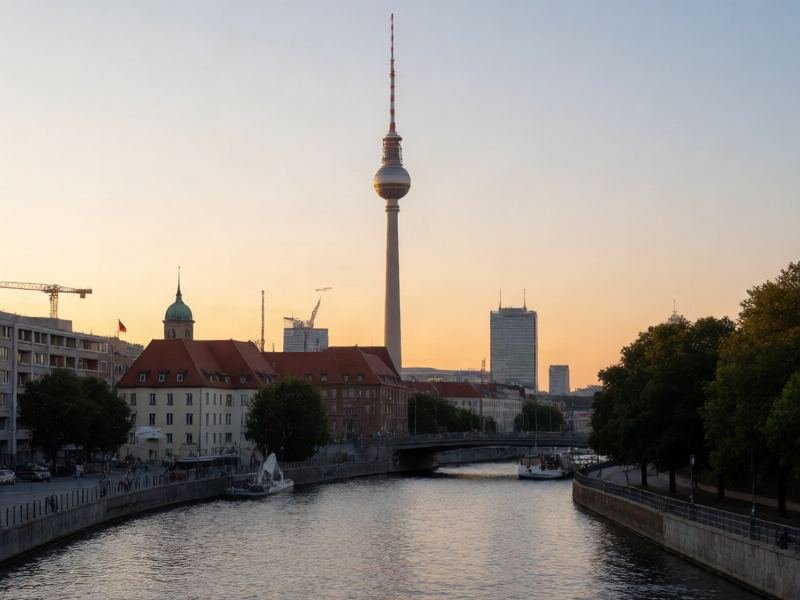
Employing in Germany
Germany is Europe's largest economy and a key market for Australian businesses in engineering, energy, education and software. It rewards long-term commitment, and employees expect formal, carefully documented terms.
Employment protection is strong. After 6 months, dismissals in businesses with more than 10 employees must be socially justified, works councils have consultation rights and notice must be given in writing with a wet-ink signature. Social insurance costs are significant. An EOR is a practical way to start without setting up a GmbH.
Why Australian businesses go there
- Largest economy in the EU
- Strong engineering, manufacturing and energy sectors
- Highly skilled and well-educated workforce
- Working holiday programme for Australians aged 18 to 30
What to watch
- Key terms have to be set out in writing from the start
- Once a business has more than 10 staff, employees with 6 months of service are hard to dismiss
- Notice of dismissal must be in writing with a wet-ink signature
- Post-employment non-competes require compensation of at least 50% of pay
Hiring and contracts
- Employment contracts
- The Nachweisgesetz (Evidence Act) requires the essential terms to be documented. Without an objective reason, fixed-term contracts are limited to 2 years, and collective or works council agreements frequently apply.
- Probation
- A probation period of up to 6 months is usual, with 2 weeks notice during it. In businesses with more than 10 employees, statutory dismissal protection begins after 6 months.
- Working hours
- The Working Hours Act sets a limit of 8 hours a day, which can stretch to 10 if the average over 6 months remains 8. Employers must keep records of working time.
- Minimum wage
- The statutory minimum wage is €13.90 an hour from 1 January 2026 and is set to rise to €14.60 in 2027.
Leave and holidays
- Annual leave
- The minimum is 24 working days a year on a six-day week, which equals 20 days on a five-day week. Many employers and collective agreements offer more.
- Sick leave
- Employers keep paying full salary for up to 6 weeks for each illness, after which statutory health insurance pays sickness benefit.
- Parental leave
- Maternity protection covers 6 weeks before and 8 weeks after the birth on full pay, funded by the health insurer with an employer top-up. Each parent may take up to 3 years of job-protected parental leave, supported by a state parental allowance.
- Public holidays
- There are 9 public holidays across the country plus state holidays, so the total depends on the state.
Employer costs
- Retirement and social security
- Employers and employees share social insurance roughly equally: pension at 18.6% on earnings up to €8,450 a month in 2026, unemployment at 2.6%, health at 14.6% plus a fund supplement, and long-term care insurance. Employers also pay for statutory accident insurance.
- Payroll taxes
- Employers withhold wage tax, the solidarity surcharge for higher earners and church tax where relevant. There is no separate employer payroll tax.
- Mandatory benefits
- Social insurance, continued pay during sickness, statutory leave and the participation rights of works councils.
Ending employment
- Notice periods
- Statutory notice is 4 weeks to the 15th or the end of a month, increasing with service to 7 months after 20 years when the employer gives notice. Notice must be in writing and signed in wet ink.
- Dismissal protection
- Once an employee has 6 months of service in a business with more than 10 employees, a dismissal must be socially justified on conduct, capability or operational grounds. The works council must be consulted before any dismissal.
- Severance
- The law sets no general severance, but settlements are common, often benchmarked at half a month of salary for each year of service.
Contract terms and visas
- IP and restraint clauses
- A post-employment non-compete can last no more than 2 years and binds the employee only if the employer pays compensation of at least 50% of their last remuneration during the restraint. Employee inventions carry statutory compensation.
- Visas and right to work
- Staff from outside the EU need a residence permit that allows work, with the EU Blue Card the usual route for professionals. Australians aged 18 to 30 have access to a working holiday programme.
Compared with Australia
| Germany | Australia | |
|---|---|---|
| Annual leave | The minimum is 24 working days a year on a six-day week, which equals 20 days on a five-day week. Many employers and collective agreements offer more. | Full-time employees get 4 weeks of paid annual leave a year (5 weeks for some shift workers), built up progressively. Unused leave is paid out when employment ends, and many awards add 17.5% leave loading. |
| Sick leave | Employers keep paying full salary for up to 6 weeks for each illness, after which statutory health insurance pays sickness benefit. | Full-time employees get 10 days of paid personal/carer's leave a year, plus 2 days of unpaid carer's leave and 2 days of paid compassionate leave per occasion. Every employee can also take 10 days of paid family and domestic violence leave a year. |
| Notice | Statutory notice is 4 weeks to the 15th or the end of a month, increasing with service to 7 months after 20 years when the employer gives notice. Notice must be in writing and signed in wet ink. | Under the National Employment Standards an employer gives 1 week of notice for up to 1 year of service, rising to 4 weeks for more than 5 years, plus an extra week for employees over 45 with at least 2 years of service. Pay in lieu is allowed, and awards set the notice employees must give. |
| Retirement and social security | Employers and employees share social insurance roughly equally: pension at 18.6% on earnings up to €8,450 a month in 2026, unemployment at 2.6%, health at 14.6% plus a fund supplement, and long-term care insurance. Employers also pay for statutory accident insurance. | On top of wages, employers pay the Superannuation Guarantee at 12% of qualifying earnings. Payday Super has applied since 1 July 2026, so contributions go out with each pay and must arrive in the fund within 7 business days. Australia has no separate employer social security levy. |
| Dismissal protection | Once an employee has 6 months of service in a business with more than 10 employees, a dismissal must be socially justified on conduct, capability or operational grounds. The works council must be consulted before any dismissal. | After the minimum employment period, employees can claim unfair dismissal if an award or agreement covers them or they earn under the high income threshold, $190,100 from 1 July 2026. Protection against adverse action under the general protections starts on day one, and small businesses may rely on the Small Business Fair Dismissal Code. |
Frequently asked questions
How much leave do German employees get?
The legal floor is 20 days for someone working five days a week. Employers and collective agreements often go further, and the number of public holidays depends on the state.
Is severance mandatory in Germany?
Not as a general rule. In practice many exits end in a settlement, and half a month of pay for each year worked is a common starting point for negotiations.
What does social insurance cost?
Pension, unemployment, health and long-term care insurance are shared roughly equally between employer and employee, and employers also fund accident insurance.